The concept fleet
Future fleet images
Five aircraft, five specification sheets, and one design that came close to happening.
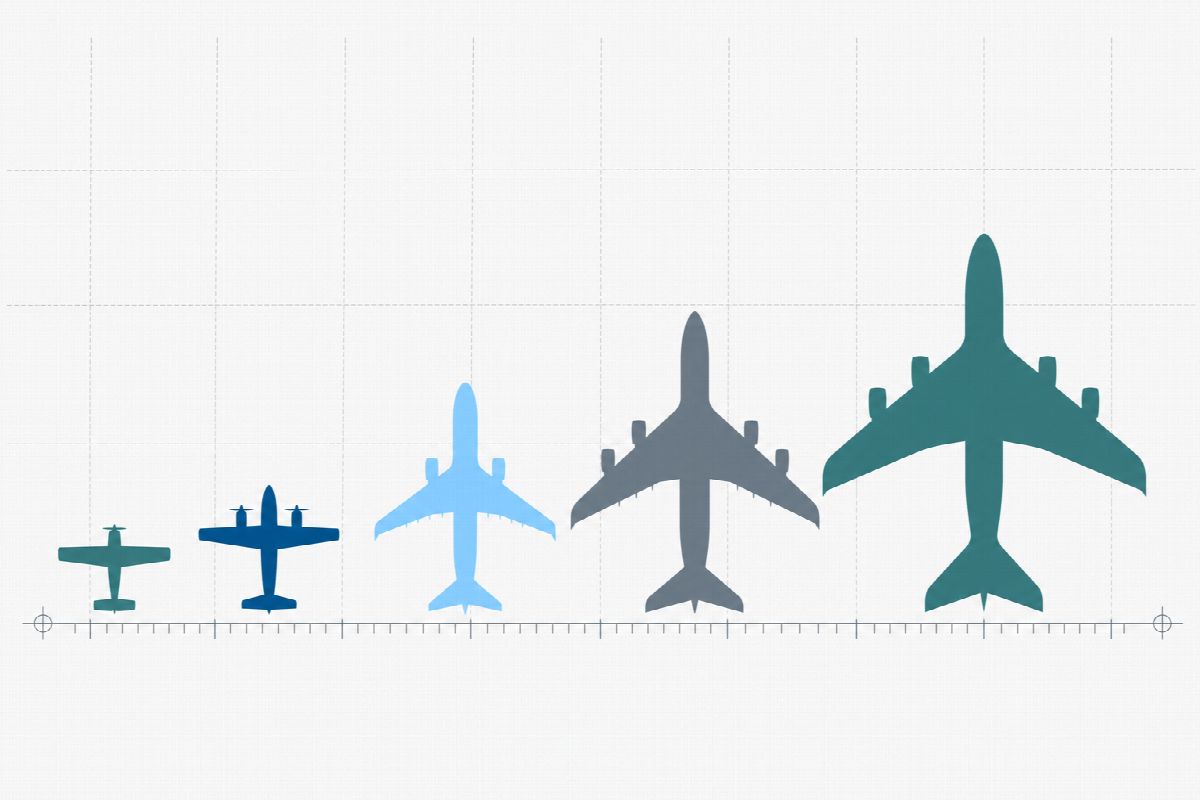
Five aircraft were drawn for this project by Kauko Helavuo of Studio Kauko Helavuo, each published with a full specification sheet. They are the part of Departure 2093 that travelled furthest, and the specification sheets are the reason: they commit to numbers, so they can be argued with.
The concepts assume a particular technological path, set out in Helavuo’s own essay — fossil fuels largely abandoned by the second half of the century, workable fusion by around 2030, cheap electricity making hydrogen from water at scale, and engines able to work efficiently at 30 to 40 kilometres altitude at Mach 4 to 8. Every figure below follows from those assumptions.
The five concepts
-
01
A600–850 M supersonic long-haul
Wide-bodied, zero-emission, nanoceramic fuselage, elastic intelligent wings. Cruise Mach 4.5 at 39,000 metres, range 26,600 km, 600–850 seats.
-
02
Same capacity, conventional speed, and a vertical take-off mode using eight engines. Cruise 890 km/h, range 9,600 km.
-
03
A charter aircraft for up to 2,400 passengers in private cabins, able to glide, take off vertically and land on water. Devotes more documentation to parachutes than to propulsion.
-
04
The modest one: a three-seat helicopter–aeroplane hybrid with variable rotor blades, expected in the 2020s. The concept that came closest to happening.
-
05
Carries 100–140 passengers to an orbital hotel at 500 km. No special comforts, and no food or drink served.
What the set has in common
Four of the five are described as zero-emission, and nearly all generate electricity from solar cells on the outer surface — 85 per cent of the skin on the small hybrid. All materials on the two A600–850 designs are stated as 100 per cent recyclable.
The recurring cabin idea is the audio-visual window: screens replacing glass, offering zoomable views of the sky or of the ground, and doubling as displays for television or for events held in the aircraft’s own restaurant. It appears on three of the five concepts. Windowless cabins with external camera feeds became a real line of research, driven by structural efficiency rather than by entertainment, so the mechanism arrived for a different reason than Helavuo gave.
Two other recurring features are the turning engine — nacelles rotating for vertical take-off and for stability at low speed — and the intelligent seat that measures pulse, blood pressure and body temperature.
How the set has aged
The two supersonic and high-capacity designs did not happen and are not close. Nobody cruises at Mach 4.5, no nanoceramic airframe exists, and the 2,400-seat charter aircraft is further from production now than when it was drawn, because the industry moved toward smaller twin-aisle aircraft on thinner routes rather than toward ever-larger hulls.
The small hybrid is the outlier. Helavuo expected first versions in the 2020s, and small electric vertical-take-off aircraft in roughly that class did enter flight testing and certification programmes in that decade. His reasoning was right too: falling solar and battery costs, an electric motor small enough to make sense, and a market for short point-to-point hops.
The service ship is the strangest case, because the vehicle is fanciful and the business model is not. Commercial suborbital flight became real, and the detail Helavuo chose — no food, no comforts, because the flight is short and the destination is the product — is exactly how those services were eventually described.
A note on the images
The original renderings were published as large downloadable JPEG files and remain the copyright of their author. The illustrations on these pages are new work made for this reference, not reproductions of the 2008 drawings. Specifications are reproduced as published.